

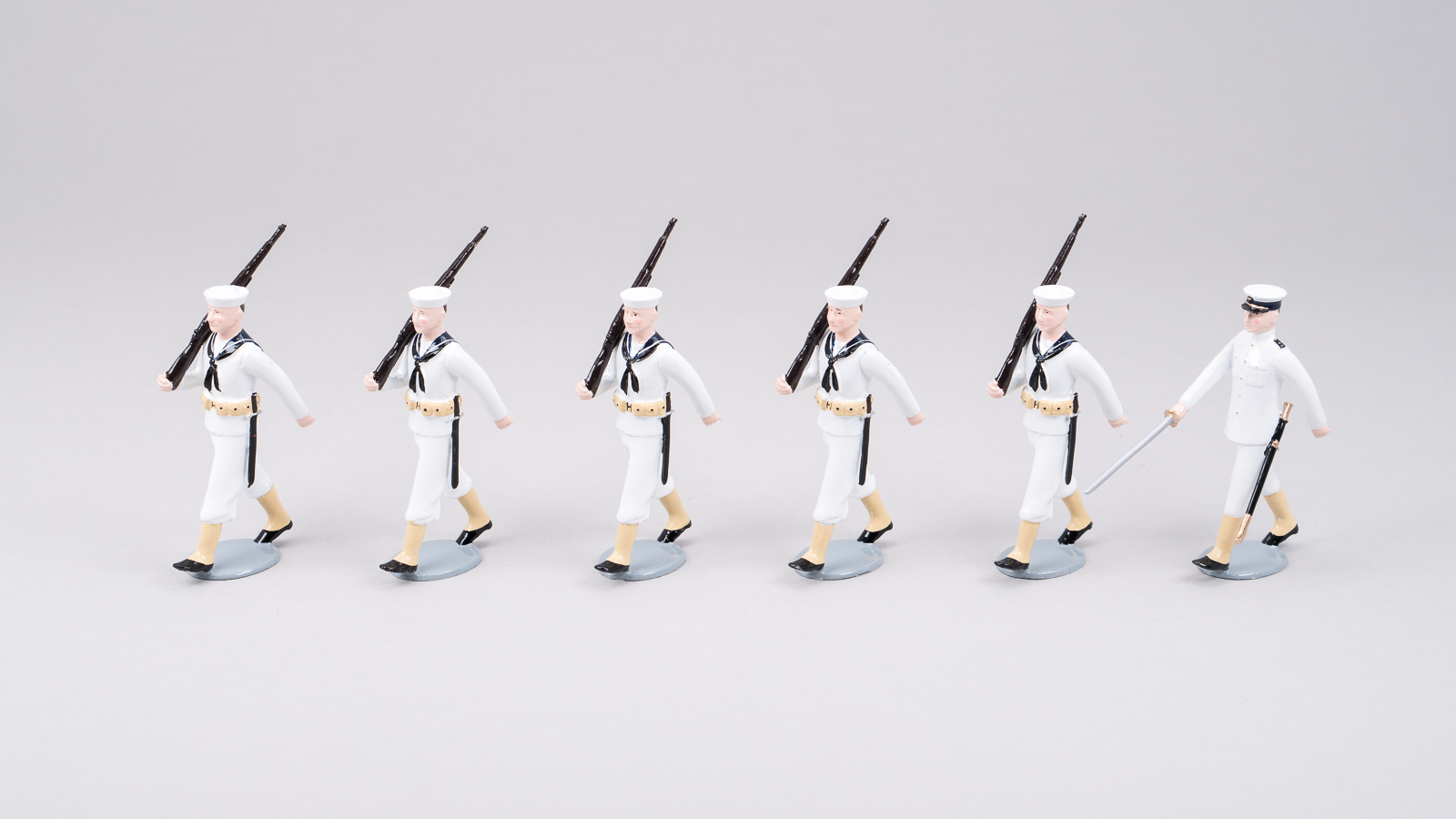
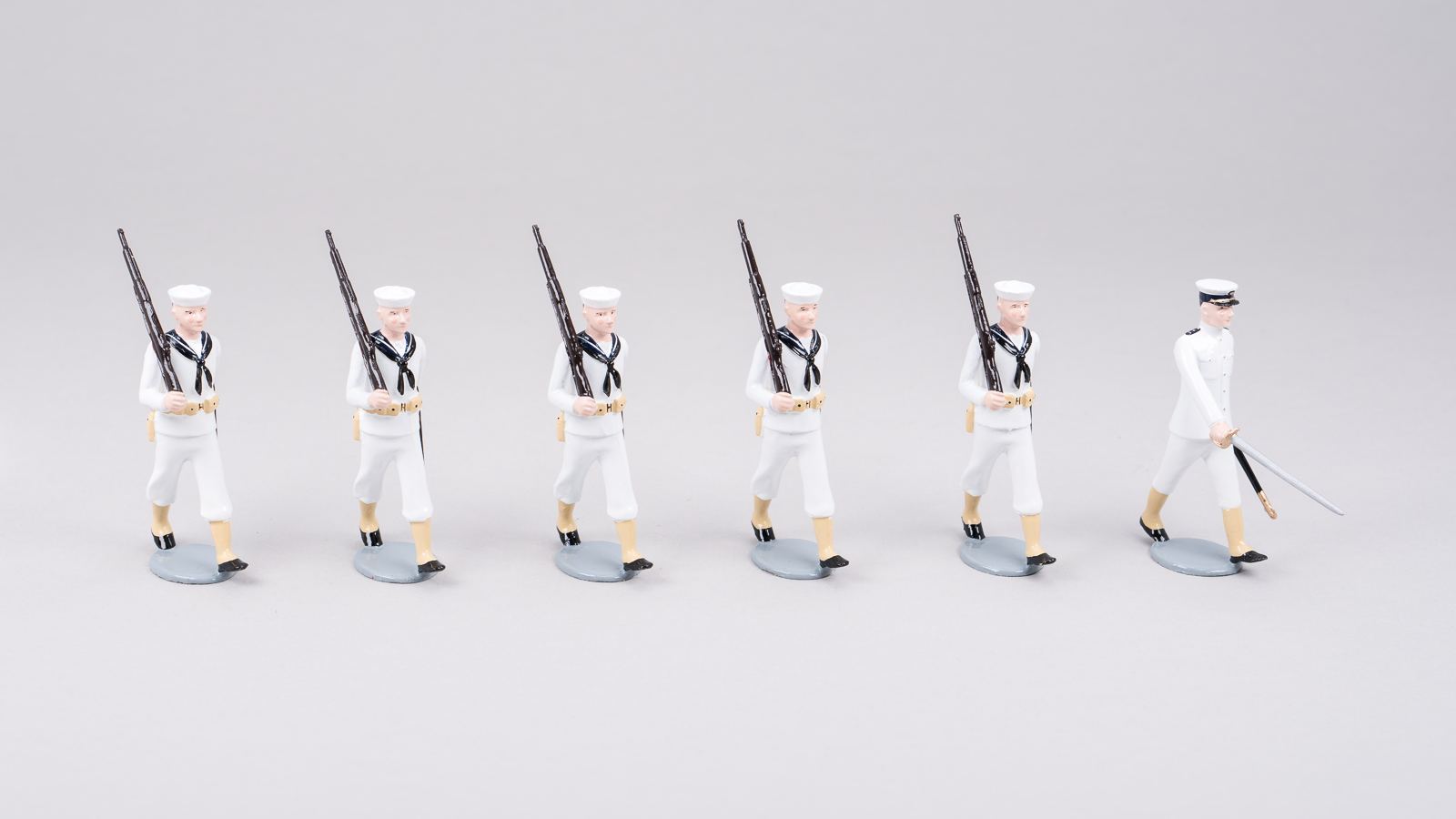
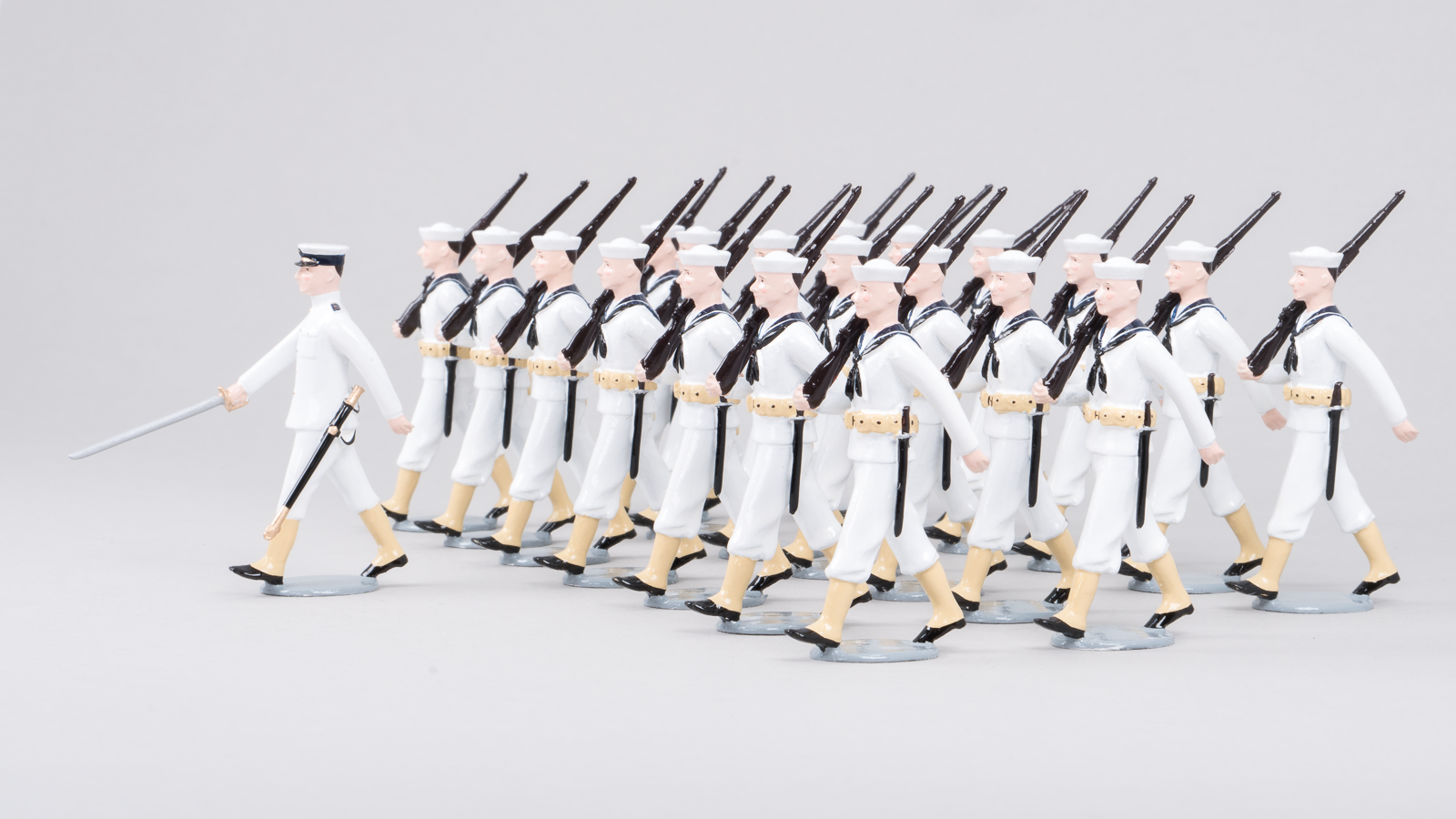
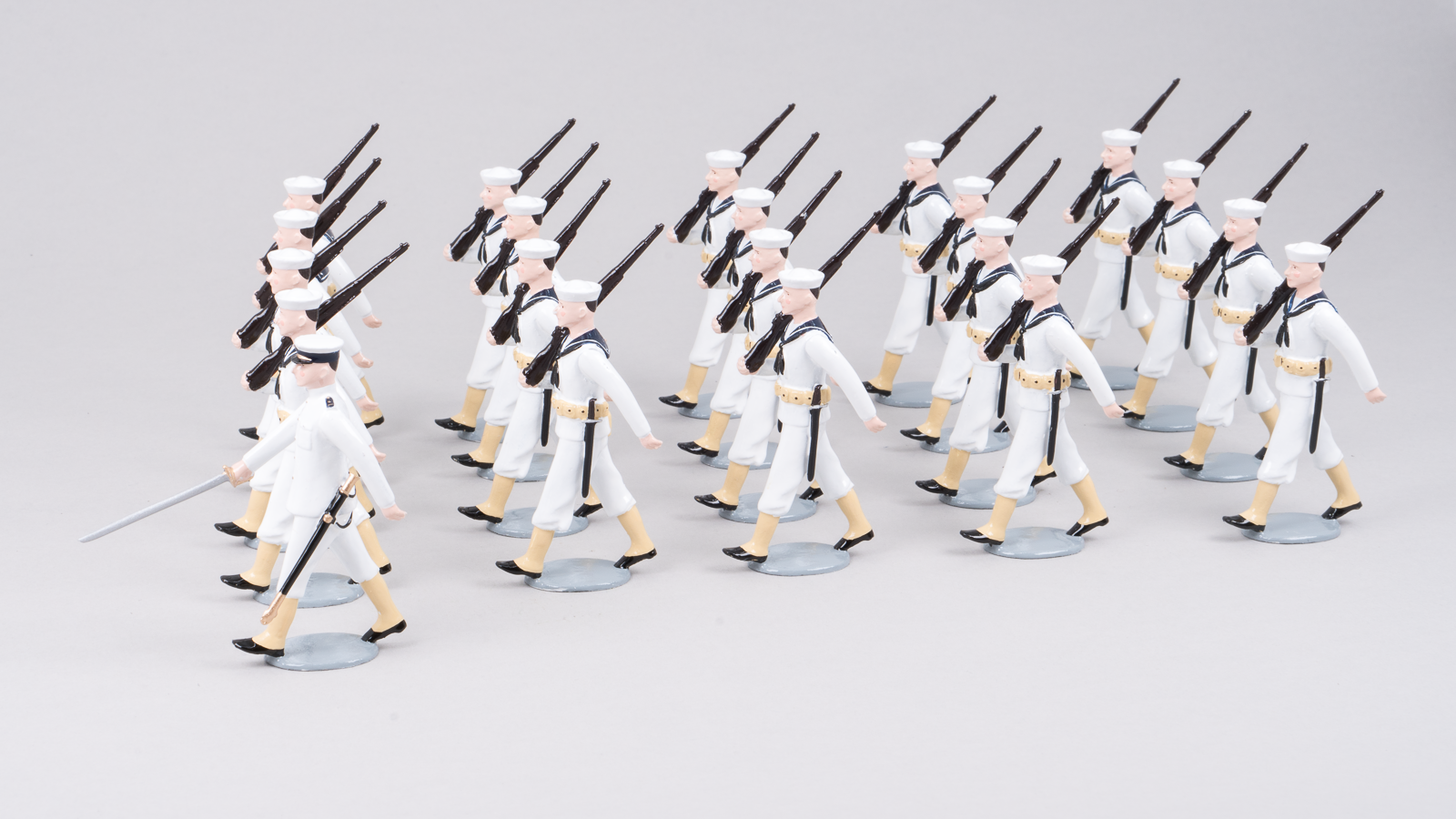
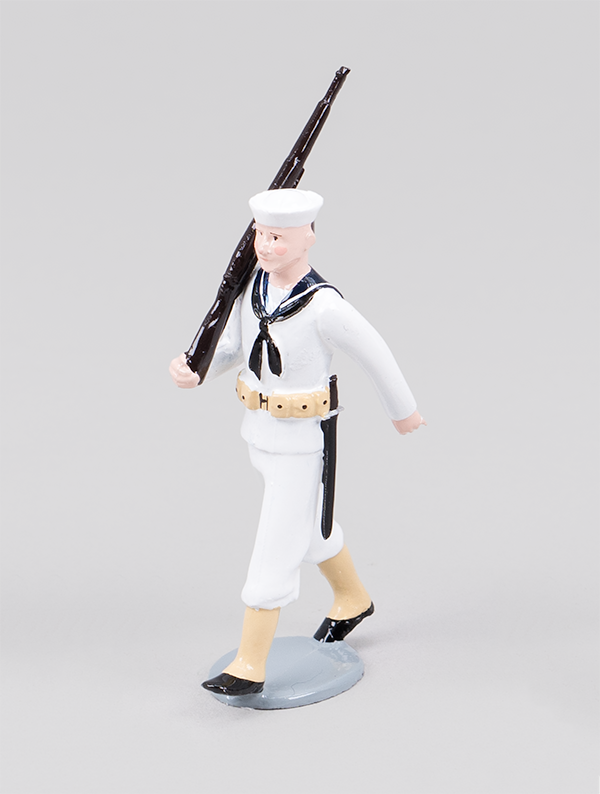
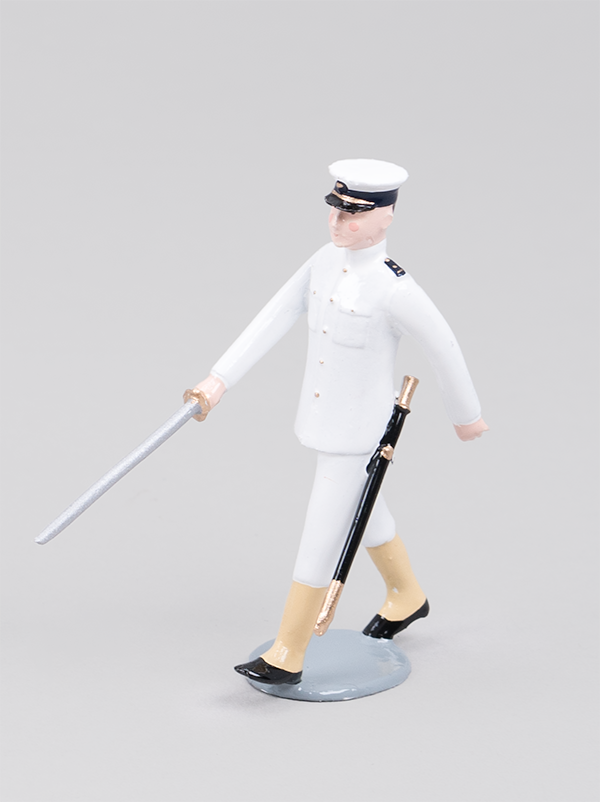
162 US Navy Summer Whites, 1918
The Atlantic lifeline: US Navy sailors in the Great War
Two million American soldiers crossed the Atlantic to fight in France. They didn't swim.
The United States Navy made the American Expeditionary Forces possible. After the U.S. entered the war in April 1917, the Navy's primary mission became the most ambitious troop transport and convoy operation in history—moving millions of doughboys and millions of tonnes of supplies across an ocean prowled by German U-boats.
This WWI figurine set depicts U.S. Navy sailors in their summer white uniforms: five enlisted men with equipment belts and rifles at slope, led by an officer with unsheathed sword. Note the rank insignia on the shoulder—distinct from the cuff placement on the standard blue uniform.
The war beneath the waves
American capital ships never engaged the German High Seas Fleet in a major surface action. The real naval war was fought against submarines. German U-boats threatened every convoy crossing the Atlantic, and the Navy's success in protecting those convoys determined whether American troops would reach France at all.
Four U.S. Navy ships were lost in the course of the war—a remarkably low toll given the scale of operations and the constant submarine threat.
The sheer weight and regularity of American personnel and matériel pouring across the Atlantic—combined with determined Allied naval blockades—put mounting pressure on Germany. It proved a decisive factor in ending the war in 1918.
Beyond the Atlantic
While the troop convoys dominated Navy operations, American sailors served across multiple theatres. Naval forces operated in the Mediterranean, patrolled the North Sea, and maintained a presence in the Pacific. Wherever the war demanded ships, the Navy answered.
A museum-quality tribute to the sailors who carried an army across the ocean.
Choose options