

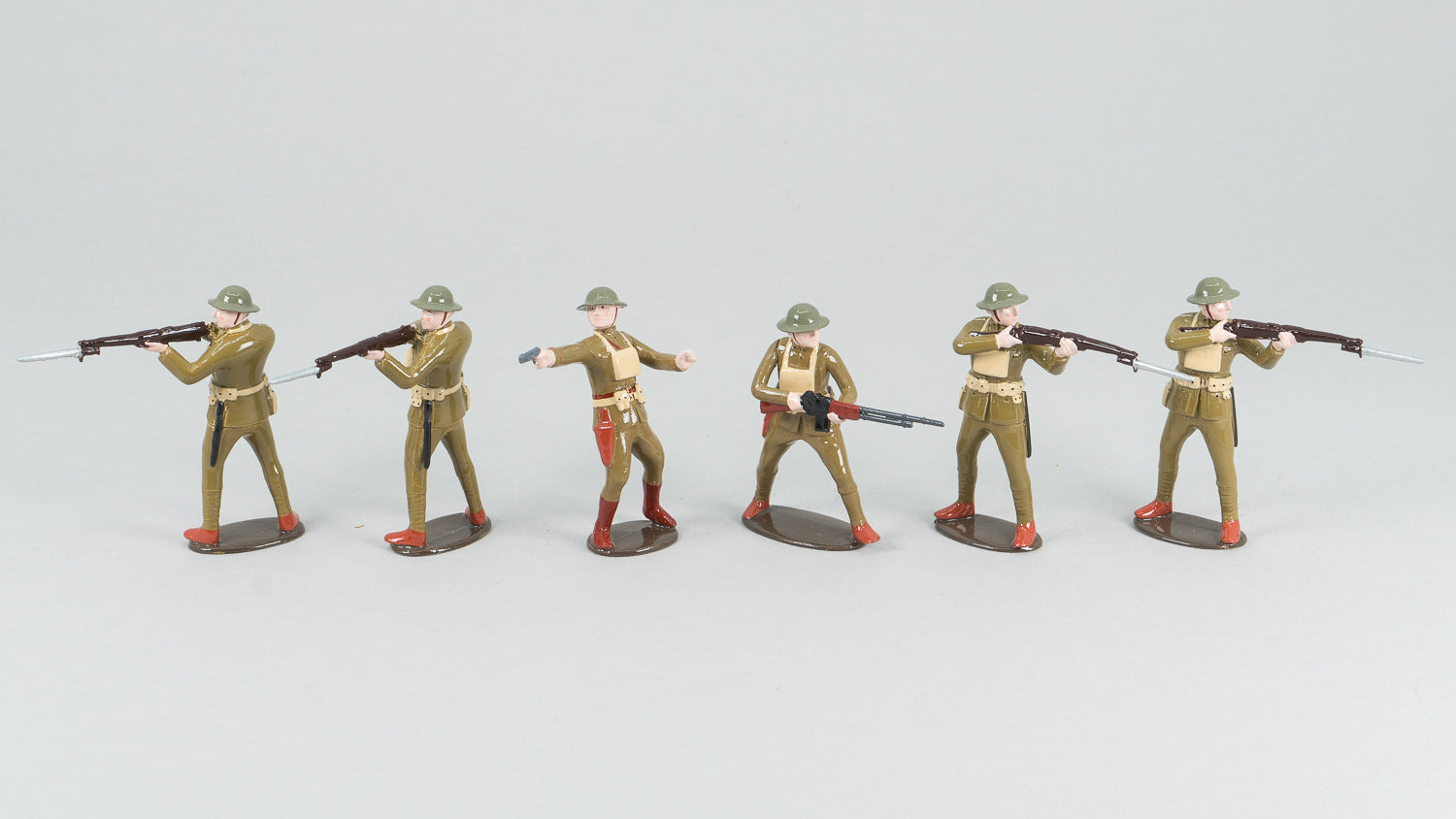
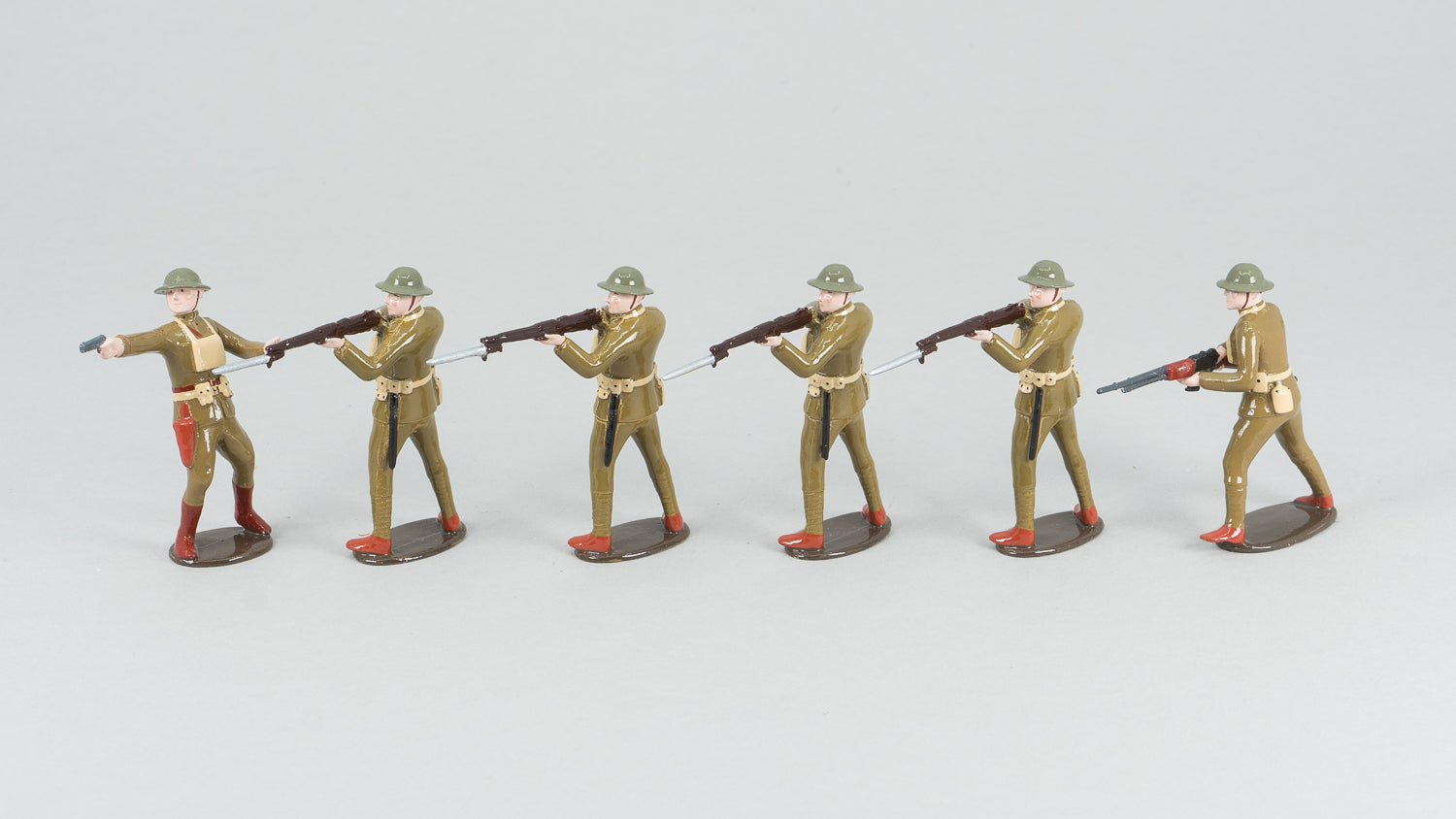
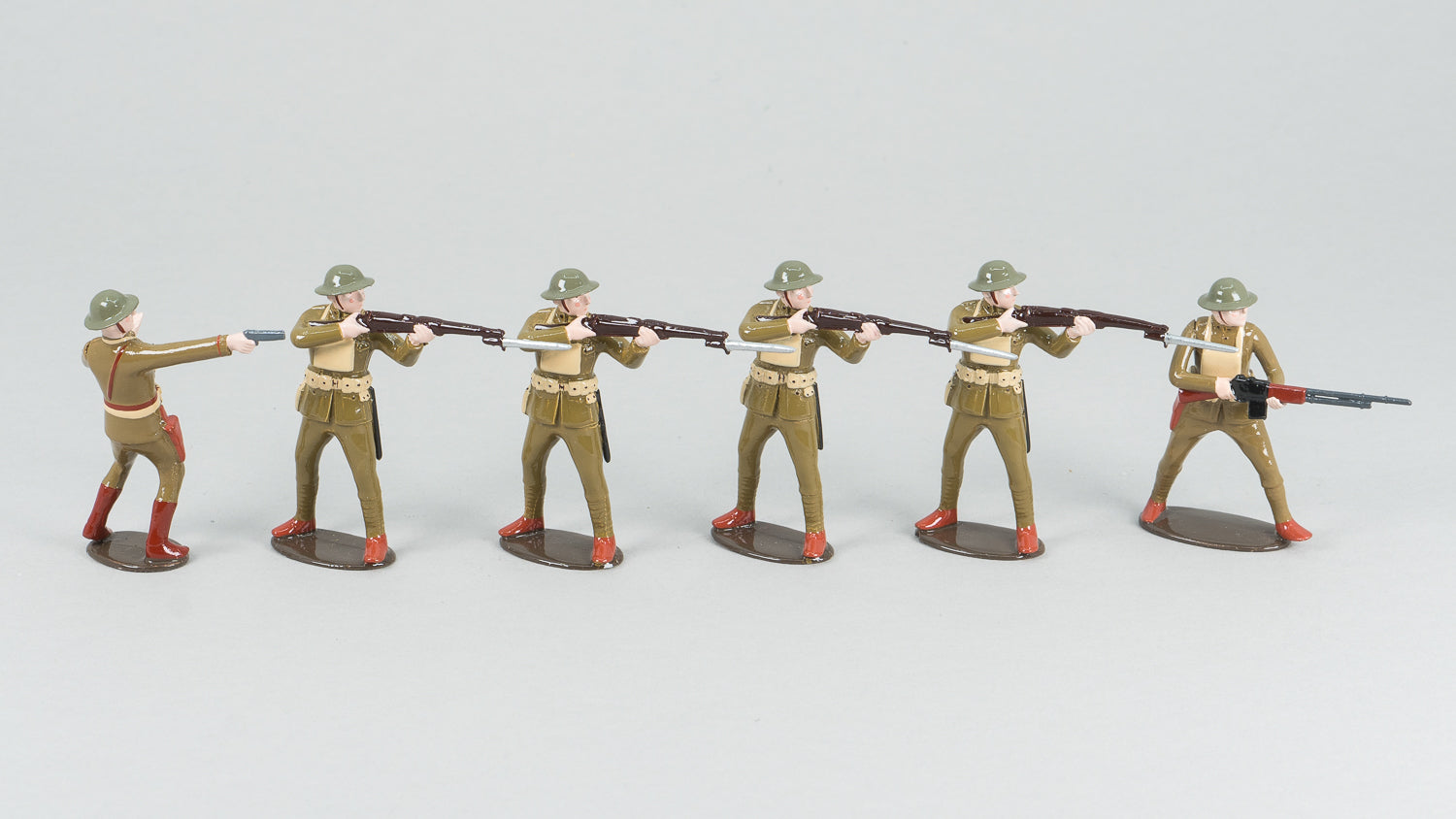
163 US 77th Div Lost Battalion, 1918
The Lost Battalion: WWI American doughboys of the 77th Division
"We are along the road parallel 276.4. Our artillery is dropping a barrage directly on us. For heavens sake stop it."
Major Charles Whittlesey scrawled those words on October 4, 1918, and sent them by carrier pigeon—his last, a bird named Cher Ami. His men were surrounded, starving, and now taking fire from their own guns.
This WWI American infantry set depicts doughboys of the legendary "Lost Battalion"—troops from the 77th Division's 308th and 307th Infantry Regiments who held out for six days against overwhelming German forces in the Argonne Forest.
Dressed for the fight
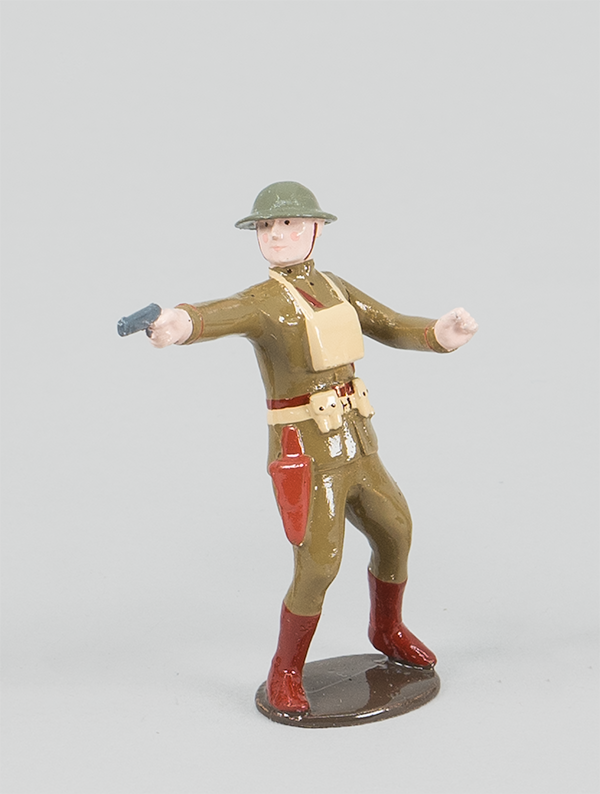
Our figures wear the authentic kit of American soldiers under siege: steel helmets, gas masks slung around their necks, no packs. Four infantrymen stand firing, joined by an officer with pistol drawn and a Browning Automatic Rifleman ready to lay down suppressive fire.
The BAR had only recently been issued to the 77th Division. While Whittlesey's trapped companies likely lacked one, the weapon would have been in the hands of the relief forces desperately fighting to reach them.
Six days in the Argonne
On October 2, 1918, Whittlesey's companies advanced through the Argonne Forest and seized Hill 198 as part of the Meuse-Argonne Offensive. They dug in—but the units on either flank failed to keep pace. German forces counter-attacked, and 554 Americans found themselves encircled.
For six days they held. Food and water ran out. Ammunition dwindled. Air resupply drops missed their mark. The rest of the 308th Infantry lost 766 men trying to break through. Reinforcements poured in from the 1st, 28th, and 82nd Divisions until, on October 8, American attacks finally pushed the Germans back and relieved the pocket.
The cost of holding on
The Lost Battalion's final tally: 107 killed, 190 wounded, 63 missing—over half the original force. Three soldiers earned the Medal of Honor, including Major Whittlesey, who received a field promotion to Lieutenant Colonel.
New York's Own
The 77th Division—officially the "Liberty" Division, though commonly called the "Metropolitan"—drew most of its men from New York City. These weren't career soldiers. They were draftees from the tenements and boroughs who found themselves holding a hillside in France against everything the German Army could throw at them.
A museum-quality tribute to one of the Great War's most famous stands.
Choose options